Decca UK History
Let's suppose that we particularly appreciate Rossini's Overtures conducted by Pierino Gamba and that we own 4 different pressings of them. Decca SXL2266 UK London CS 6204 UK King SLC 1065 Japan Decca JB33 UK
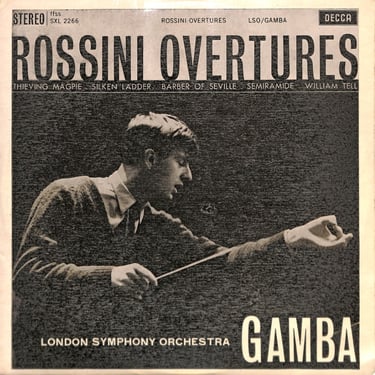
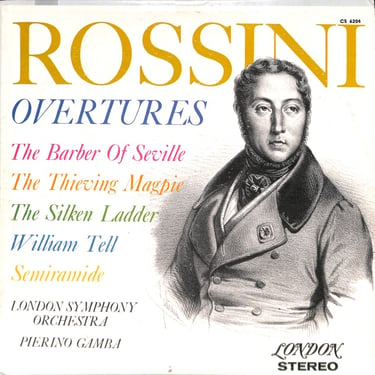
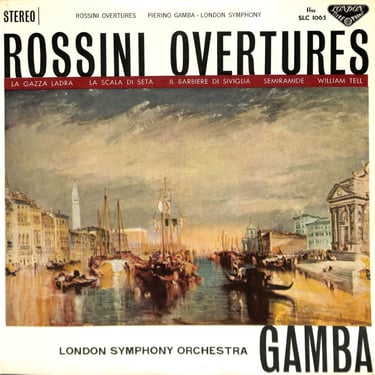
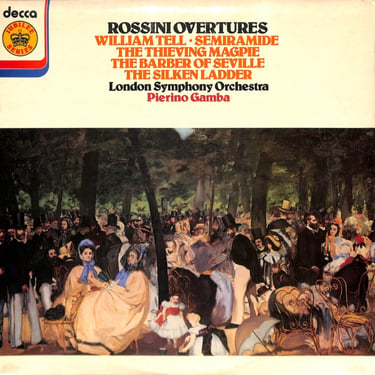
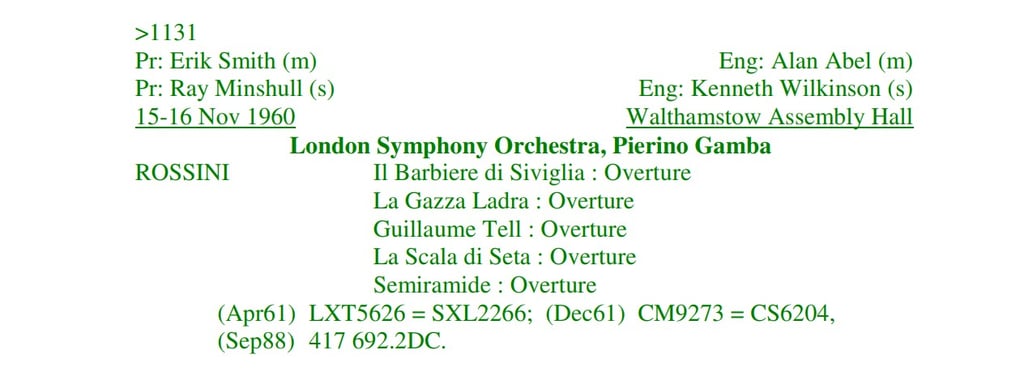
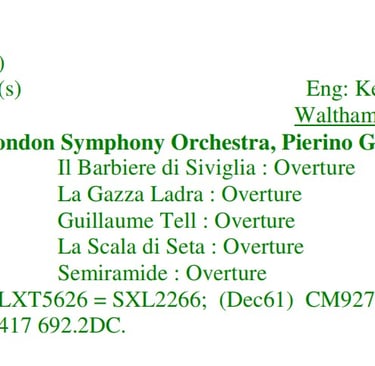
We are curious and want to know everything about the recording and on the site https://charm.rhul.ac.uk/discography/decca.html we can find all the information possible about all the classical music recordings of Decca from 1929 to 2009. We look for our record and this is the result
We learn that the recording took place at Walthamstow Assembly Hall on 15th and 16th November 1960 and that, for the stereo version, the producer was Ray Minshull and the sound engineer was Kenneth Wilkinson. (while the team for the mono version was Erik Smith and Alan Abel) We also learn that the first Decca version (SXL2266 stereo and LXT5626 mono) was marketed in April 1961 while the first London version for sale on the US market (CS6204 stereo and CM9273 mono) was marketed in December 1961.
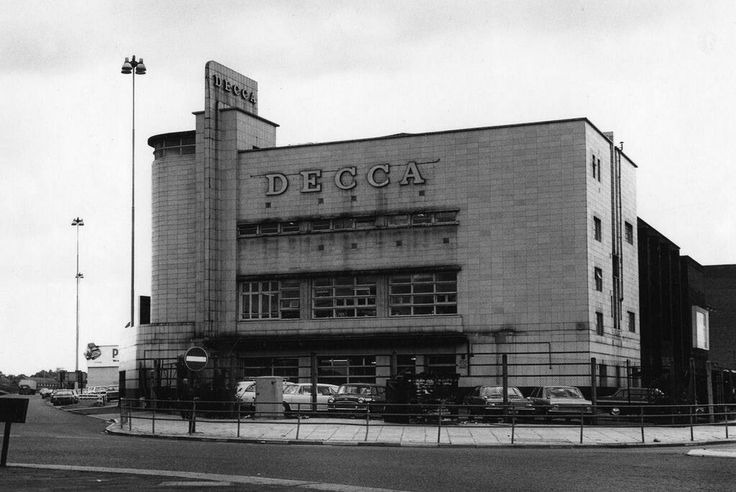
Decca New Malden factory
Now we need to investigate the vinyl, especially in the dead wax, that empty space between the engraved part and the label.
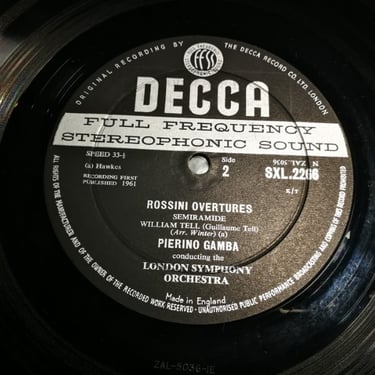
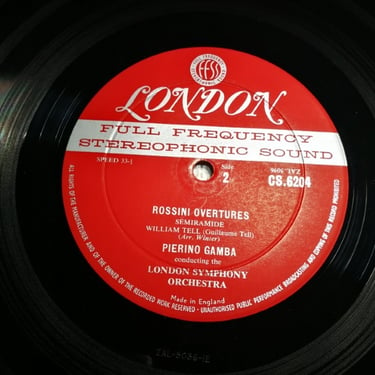
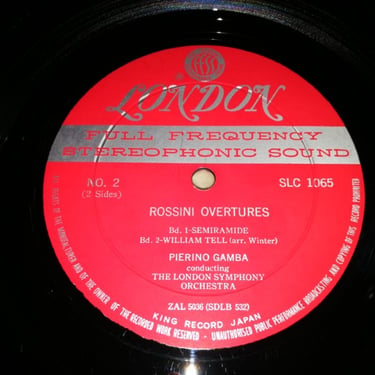
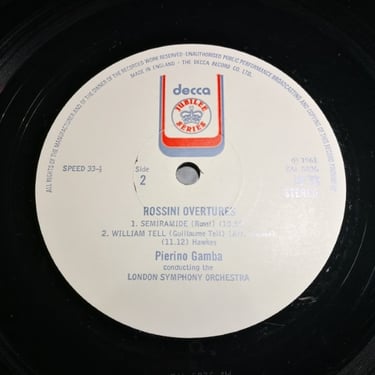
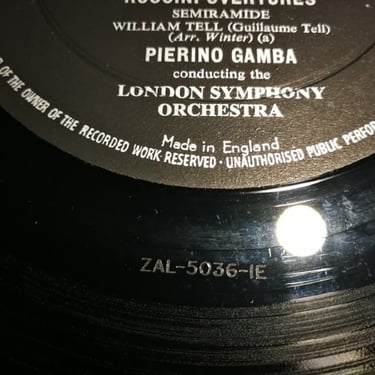
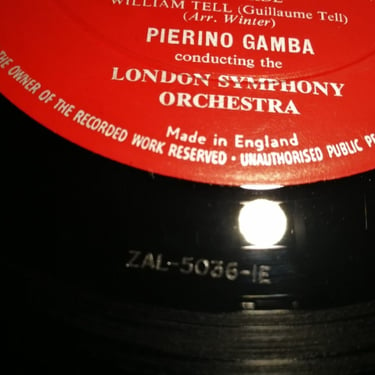
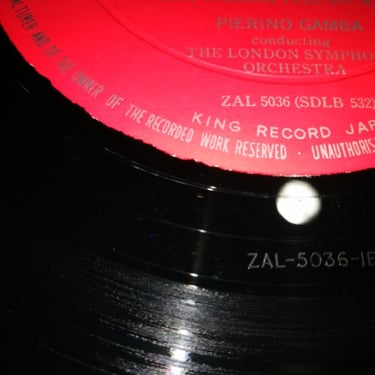
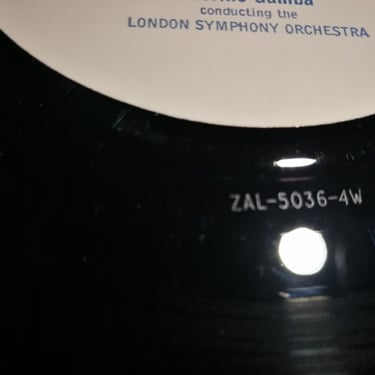
Decca ZAL5036 1E London ZAL5036 1E King ZAL5036 1E JB ZAL5036 4W 140gr 150gr 205gr 130gr
In the run-out groove (dead wax), with the label positioned upright, the alphanumeric string "ZAL 5036 1E" is visible at the 6 o'clock position. "ZAL 5036" represents the progressive mastering sequence number assigned to the Side B master tape, while "ZAL 5035" designates the master tape for Side A. The prefix denotes the format: "ZAL" signifies a stereophonic recording, whereas "ARL" indicates a monophonic production. The suffix "1E" specifies the first lacquer cut executed by mastering engineer Stan Goodall, who was assigned the letter code "E."
To better illustrate the process: once tracking and mixing are complete, the balance engineer delivers the final two-channel master tapes—one for each vinyl side—to the mastering room. In this instance, Kenneth Wilkinson handed the two master tapes (ZAL 5035 and ZAL 5036) over to Stan Goodall. Goodall then cut the ZAL 5036 tape onto a lacquer blank. The results met Decca's strict quality thresholds on the first attempt, meaning this lacquer was approved for production and stamped into the dead wax as "1E" (the first successful cut by engineer "E").
The same procedure was initiated for Side A using the ZAL 5035 master tape, but an issue arose—either during the initial lacquer cut itself or during the subsequent electroplating phase at the factory. Consequently, the first lacquer (ZAL 5035 1E) had to be rejected. Goodall was forced to cut a second lacquer blank, which successfully passed inspection. This second attempt was marked as "2E." As a result, a true first pressing of this specific vinyl release will always bear the mixed matrix codes ZAL 5035 2E on Side A and ZAL 5036 1E on Side B.
We have seen that the E code corresponds to Stan Goodall. Here is the list of the other technicians involved in cutting the lacquers
A = Guy Fletcher D = Jack Law E = Stanley Goodall F = Cyril Windebank G = Ted Burkett from 1962 on. Danny Gosling 1958, and Simon Eadon very few K = Tony Hawkins from 1962 on. Earlier records with K was Peter Atwood L = George Bettyes M = Paschal Byrne N = Noel Taylor 1959 P = Mike Goldsmith 1959 T = Gil Went V = Quentin Williams W = Harry Fischer
For the completeness of this list, I must thank Larry Toy, the foremost expert on Decca recordings (author of Decca: The Supreme Stereophonic Legacy), who had the opportunity to interview numerous Decca engineers. In his notes, Larry writes: "John Dunkerley also told me that other engineers (including himself) were occasionally pulled in to do some temporary cutting work. They would simply borrow someone else's initial, so you can't be absolutely sure."
What engineering tools did mastering technicians actually have at their disposal to execute these complex lacquer cuts? At the dawn of the stereo era, Decca utilized the Neumann AM-32 disc-cutting lathe. Unlike older machinery that maintained a fixed groove pitch, the AM-32 featured an advanced variable-pitch system governed directly by the amplitude of the incoming audio signal. This was achieved by modifying the source tape transport to include a specialized "preview" playback head. Positioned upstream from the primary playback head, the preview head read the audio signal ahead of time and fed it into the lathe’s drive mechanism. This allowed the lathe to dynamically expand or contract the groove spacing exactly one-half rotation before the cutting stylus received the same audio signal from the main playback head, maximizing available space on the vinyl surface. In 1958, the Neumann ZS 90/45 stereo cutterhead arrived. Co-developed with Teldec—a prominent joint venture between British Decca and German Telefunken—this hardware combined vertical and lateral modulation into a single, V-shaped groove where each wall was oriented at a precise 45-degree angle. To drive the physical stylus, the ZS 90/45 relied on Neumann's proprietary VG1 cutting electronics, powered by a pair of 60-watt vacuum tube power amplifiers (Neumann LV 60), utilizing EL156 tubes in a push-pull configuration.


Why is it so critical for a collector to know exactly which lathe and cutterhead were used during the lacquering stage? Simply put, the mechanical nature of the cutterhead—coupled with the meticulousness of its maintenance—is one of the most defining factors influencing the sonic translation from tape to vinyl. Between 1958 and 1968, the era dominated by the Neumann AM-32 lathe and ZS 90/45 cutterhead combination, all stereophonic Decca discs were cut using a specialized process known as half-speed mastering. During a half-speed mastering session, both the playback deck running the master tape and the cutting lathe are operated at exactly half their normal operating speeds. For example, a master tape originally tracked at 30 inches per second (ips) is slowed down to 15 ips, while the cutting lathe is dropped from 33⅓ RPM to 16⅔ RPM. Decca implemented half-speed cutting out of sheer technical necessity: the ZS 90/45 cutterhead suffered from a relatively low high-frequency resonance peak, which occurred just above 8kHz. By cutting at half speed, engineers effectively doubled the head's high-frequency threshold, extending the upper limit to a more acceptable 16kHz. However, this mechanical workaround introduced a distinct set of engineering challenges: Low-Frequency Anomalies: Halving the speed compromised low-frequency behavior and tracking. Tape Head response: The frequency response of professional playback heads behaves differently at 15 ips compared to 30 ips. RIAA Equalization Shifts: The standard RIAA equalization curve had to be mathematically altered and customized during the lacquer cut to compensate for the halved frequencies—a highly complex task to execute accurately with analog electronics. Blind Mastering: because the music was playing back an octave lower and at half the tempo, mastering engineers could not reliably monitor what they were actively cutting, making real-time sonic adjustments nearly impossible. Compounding these speed adjustments was Decca's proprietary approach to pre-emphasis. Renowned mastering engineer Steve Hoffman notes:"Decca boosted the treble when recording and reduced it around 5 dB at 8k or so when mastering in the old days to reduce tape hiss (prior to the adoption of the Dolby A noise reduction system in 1966). If a vintage British Decca recording is remastered today, it must be processed through a dedicated Decca EQ compensation box in the playback circuit; otherwise, the transfer will sound overwhelmingly bright and shrill." Do these severe technical limitations imply that stereo lacquers produced between 1958 and 1968 were sonically inferior to later cuts? Absolutely not. The undisputed "Golden Age" of stereo vinyl was forged entirely on the back of the AM-32 lathe, the ZS 90/45 cutterhead, and the LV60 tube amplifiers. The highly prized cuts engineered by Ted Burkett—perhaps Decca's most famous mastering technician, identified by the letter G in the dead wax—were largely produced using this exact vintage hardware, long before the solid-state Neumann SX-68 cutterhead was ever deployed. To help collectors differentiate between a vintage ZS 90/45 tube cut and a later Neumann SX-68 solid-state cut, we must look to the runout grooves. A common point of confusion among audiophiles online is the appearance of a "GR" stamping. The attached image illustrates a clear example of this "GR" dead wax inscription for visual reference. To clarify: records bearing the "GR" code were indeed mastered by Ted Burkett (G), but the accompanying R indicates a later recut with specific mastering chain variation.

The "R" does indeed stand for "Remastered," but it specifically indicates a hardware transition: it denotes that a new lacquer was cut using the solid-state Neumann SX-68 cutterhead for a title that had previously been mastered using the older tube-era Teldec ZS 90/45 head. Because of this specific workflow, a collector will never encounter a "1GR" matrix code. The "R" modifier was only appended when a legacy master tape, originally cut on the Teldec system, was brought back to the mastering suite to be recut on the Neumann SX-68 hardware. Conversely, if a master tape was newly recorded and delivered after the SX-68 had already been fully integrated into Decca's mastering chain, the "R" was entirely unnecessary, and the standard numerical sequence sufficed. This hypothesis is supported by the physical manufacturing dates of these specific reissues. Accurately pinpointed by label variations and UK purchase tax codes, they all cluster uniformly between 1969 and 1972, perfectly coinciding with Decca's historical phase-out of the old Teldec heads. Here are some examples for illustrative purposes.
Verdi La Forza del Destino box 4 LP Molinari-Pradelli Del Monaco Tebaldi:
London OSA 1405 Blueback ZAL 2818 1K ZAL 2819 1K first pressing UK 1958
King records 7034 ZAL 2818 1K ZAL 2819 5G second pressing JP 1968
Decca SXL 2069 WB3 ZAL 2818 4GR ZAL 2819 12GR late pressing UK 1970
Puccini Tosca box 2 LP Maazel Nilsson Corelli
Decca SET 341 WB2 ZAL 7724 2G ZAL 7725 1G first pressing UK 1967
King records 7025 ZAL 7724 5G ZAL 7725 2G first pressing JP 1967
London OSA 1267 ZAL 7724 8GR ZAL 7725 7GR late pressing UK In summary, the transition to the Neumann SX-68 cutterhead followed a highly specific industrial pattern. For newly captured recordings, the SX-68 was implemented as the new standard operating hardware without any overt indication in the dead wax or on the packaging. However, when legacy titles originally cut on the Teldec ZS 90/45 required new stampers for a reissue, technicians recut the lacquers on the modern Neumann system, appending the "R" modifier to their mastering initials—most frequently seen alongside Ted Burkett's "G" stamp. This matrix modification occurred with significantly higher frequency on operational releases due to distinct catalog economics:
Opera Box Sets: Given the massive financial investment and complexity required to stage and record full operas, Decca rarely funded new productions of the same piece. Instead, they continually repressed existing flagship recordings to meet demand, triggering the need for Neumann SX-68 recuts (and the subsequent "R" stamps).
Symphonic and Orchestral Repertoire: For standalone symphonies and concertos, Decca found it far more profitable to cut new recordings with contemporary performers rather than continuously reissuing older editions. As a result, vintage orchestral tapes were rarely brought back to the lathe during this specific transition period.
It is crucial to note that these observations apply specifically to the premium SXL series. When Decca launched its budget and mid-priced reissue series in the early 1970s—such as Ace of Diamonds (SDD), Jubilee (JB), and SPA—the Neumann SX-68 (and later the SX-74) had already become the absolute baseline standard across all mastering rooms. Consequently, these later budget pressings routinely utilized solid-state cuts as a matter of course, bypassing the need to include the transitional "R" marker in their dead wax.
In short, synthesizing the extensive documentation, archival records, and interviews with Decca recording engineers, mastering technicians, and producers, a clear picture emerges of the early stereo era: it was a time when engineers had to continuously innovate, inventing creative solutions and technical workarounds to overcome the limitations of their immature, pioneering equipment. The fact that they not only succeeded, but that their records—nearly seventy years later—remain the absolute gold standard for acoustic fidelity, is a definitive testament to their great capabilities.
When all of these variable factors, hidden pre-emphasis tweaks, and mechanical half-speed adjustments are fully considered, the modern concept of a rigid, clinical adherence to a standardized RIAA equalization curve becomes essentially meaningless.
A dedicated chapter will analyze in detail how these technological advancements have shaped and modified the sonic characteristics of Decca pressings over time
Let's now look at the dead wax of the Decca SXL at 12 o'clock and read the engraving KT while on the London CS we read ET. These are two of several codes of what is generally known as the tax code ( T stands for tax ) and indicates the period in which the vinyl was printed. In reality this code should be better defined (and at the time it was better known) as RPM (Retail Price Maintenance) and indicated the selling price that was controlled by each of the record manufacturers. This distinction is important (and for this information I have to thank Rob from rarityvalue) because not all the codes were used by all the producers and therefore it can happen to find a record with a code older than the pressing period (For example Decca in 1960/61 did not change the selling prices and continued to use the ET code from 1959)
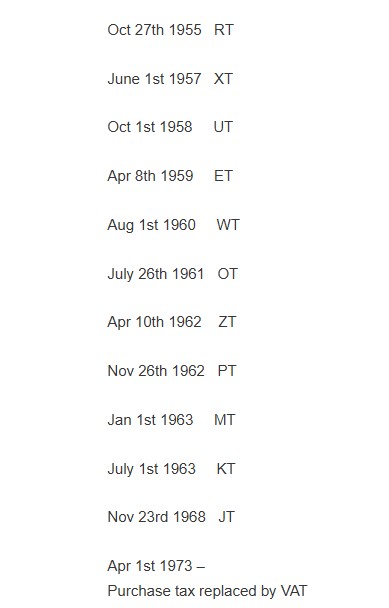
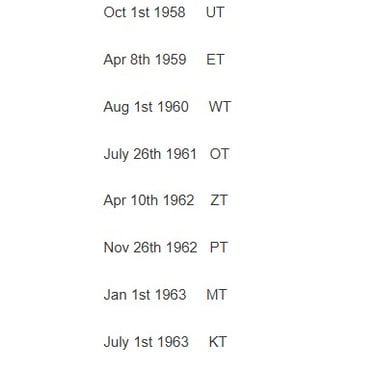
The table below highlights the codes used from 1959 to 1973 which are valid for all record producers in UK, including both the Decca and the London since they were printed in the same factory in the UK.
It cannot be stated with absolute certainty, but records pressed with a code prior to JT (Nov 68) should use lacquers cut with the ZS 90/45 cutterhead.
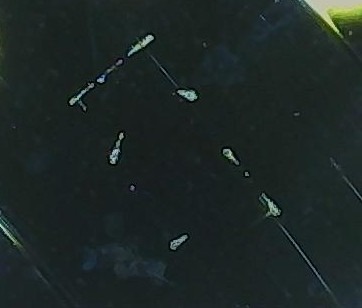
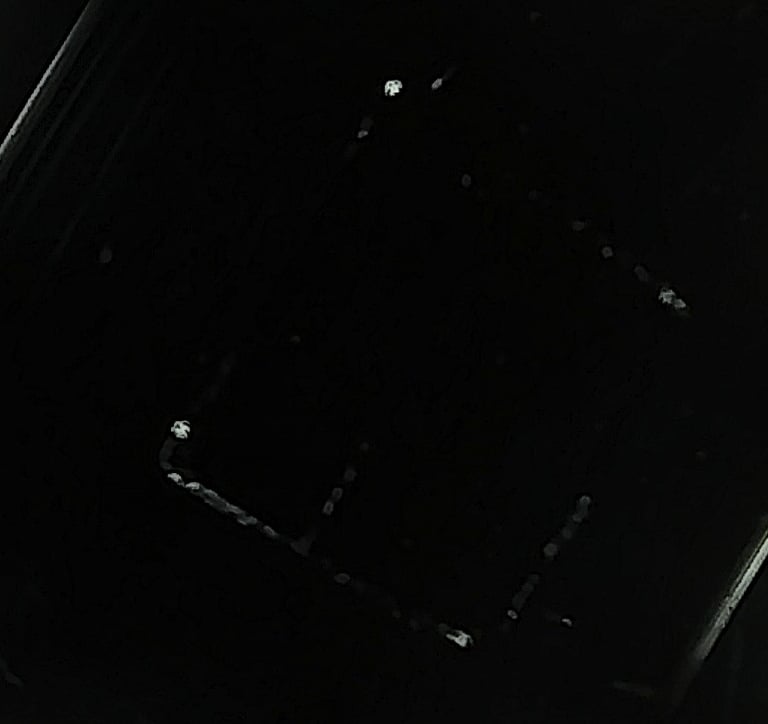
This table courtesy of https://londonjazzcollector.wordpress.com/
Decca KT code London ET code
After looking at 6 and 12 o'clock, we try to look at 9 o'clock and we find the engraved writing 1. That is the number of the "mother", information of relative utility if we do not know what the "mother" is. So let's take a step back and return to Stan Goodall who has just finished cutting the lacquer ZAL5036 1E; this lacquer (a 14" diameter aluminum disc covered in lacquer) constitutes a "positive" and could be played on a turntable if it were not so delicate. This lacquer will be used to obtain, through a plating process, a nickel-coated copy called "father" or "master" which will constitute a "negative". Since it is so delicate, from one lacquer you get only one father. The latter could be used to press records but generally, always through a plating process, is used to produce more "mothers". Deriving from a negative, the mother is a positive like the lacquer and could be played on a turntable but instead it will be used, through the final plating process, to obtain the "stampers" which will be negatives intended to press the records. So, to recap: from a lacquer (positive) you get only one father (negative) from which you get multiple mothers (positive) and from each mother you get multiple stampers (negative)..The above method of creating a stamper is known as a three-step plating process and it is alternative to the so called one step processing where the father is used as the stamper. The one step system has never been adopted by the major record companies because, although it allows for better quality, it limits the quantity of copies to a few hundred for each lacquer and is therefore absolutely unsuitable for medium and large runs
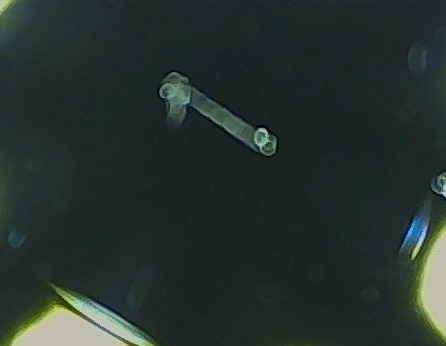
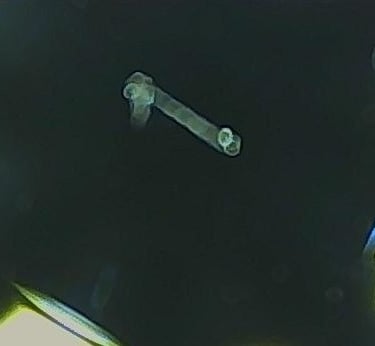
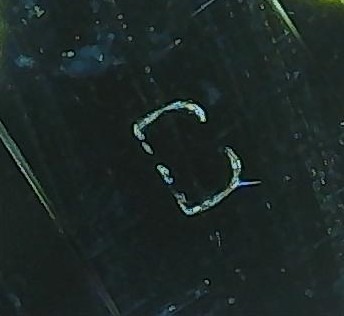
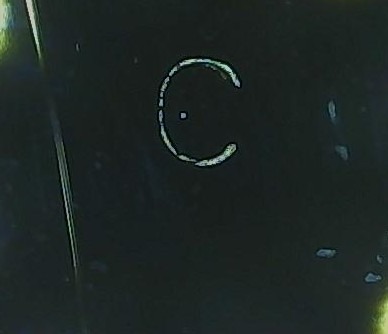
At this point we just have to look at 6 o'clock, where we find the letter B on the Decca SXL and the letter C on the London CS. These letters are part of the so-called Buckingham code used by Decca to number the stampers; with this code the 10 letters that make up the word Buckingham replace the numbers from 1 to 10. Therefore, B corresponds to the number 1, M corresponds to 10, and to indicate the eleventh stamp, BB is used.
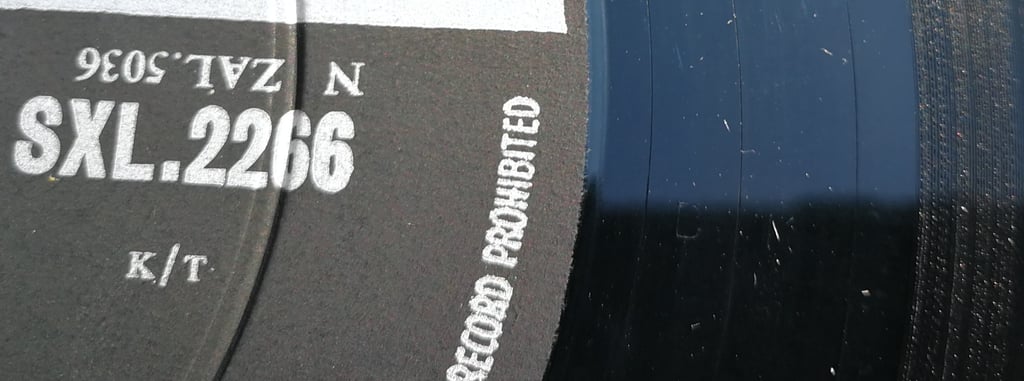
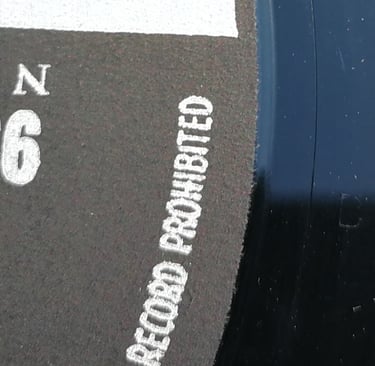
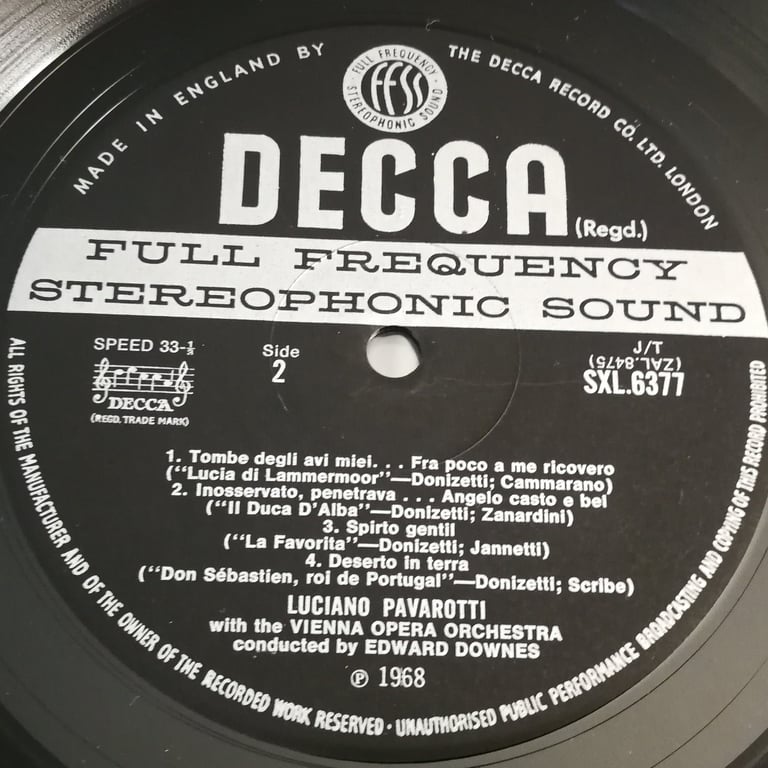
Now let's analyze the labels. The first ones are called wide band because there is the silver band with the writing "Full Frequency Stereophonic Sound" just above the spindle hole . The first wide band label appeared in 1958 and it is the so-called ED1. It has "Original Recording by" written between 9 & 12 o'clock, round the edge of the label and has a deep groove in the vinyl, under the label, about 1cm from the outer edge. This deep groove is obviously caused by the pressing machine and gives us a rough indication of the period in which the record was printed. The last ED1s were printed in 1965/66 but some reissues used these labels, which were available as remnants, until 1968
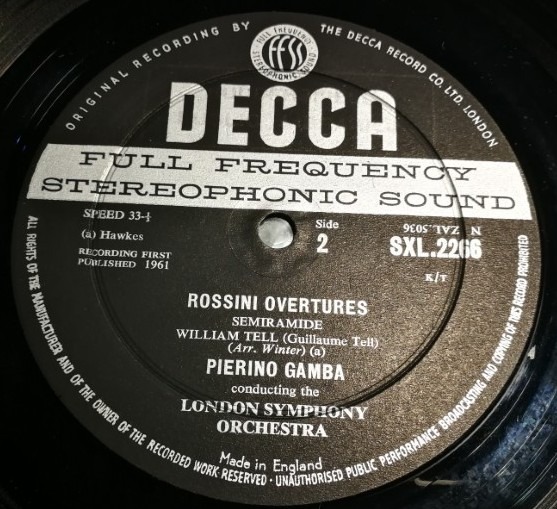
The ED2 version appears in the years 1965/66 and ends in 1969. It is substantially the same as the ED1 version and the main difference is the writing "Made in England by" that replaces "Original recording by ". The ED2 version the deep groove remains
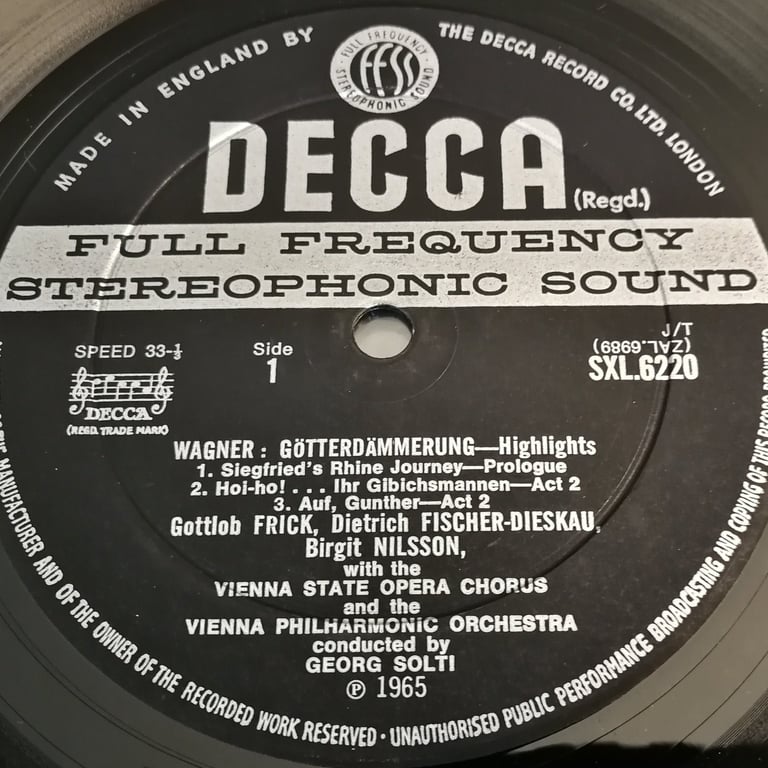
The ED3 version appears in 1969 and ends in 1970. It is substantially the same as the ED2 version and the only difference is that it does not have the deep groove.
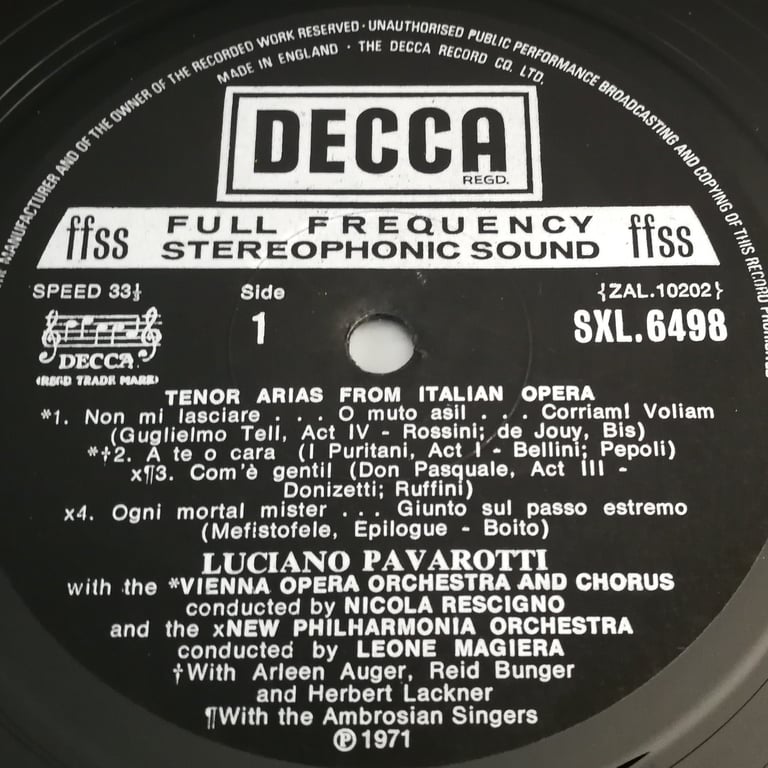
The ED4 version is the first so-called " narrow band label ". It takes this name because the silver band saying “Full Frequency Stereophonic Sound” is narrower than the wide band on ED1, ED2, ED3. It appears in 1970 and will end in 1979 when Decca will stop producing records in the UK and will move production to Holland.
MONO AND STEREO
We have already seen from the analysis of the Gamba recordings of the Rossini Overtures that a dedicated team was used for the mono version (Smith and Abel) while a completely separate one handled the stereo recording (Minshull and Wilkinson). It is worth noting that stereo records were not marketed until 1959; consequently, up until that point, Decca's revenue relied entirely on mono sales. Even during the early years of the stereo era, mono record sales remained significantly stronger, which is why so much care was taken to deliver the highest quality product. However, as stereo sales began to gain momentum, Decca decided to derive mono versions directly from the stereo mixes, allowing them to streamline production down to a single recording team. Let's now examine the timeline for mono recordings: in Europe, they effectively came to an end in the first half of 1961 following a specific transition process. Initially, two entirely separate teams—each consisting of a producer and a sound engineer—were assigned to the mono and stereo versions. Later, a single sound engineer would handle both formats simultaneously, working alongside two different producers. Even as early as 1960, for recordings of lesser commercial significance or those intended for budget series like the Reader's Digest releases, Decca limited production to just the stereo team to minimize costs
Decca and RCA recordings
As part of the deal by which Decca took over the UK distribution of R.C.A.
recordings from H.M.V., it was agreed that R.C.A. artists would be recorded by
Decca producers and engineers in Europe. This allowed such conductors as
Reiner, Monteux and Leinsdorf to record with the Vienna Philharmonic and
there were also sessions in Paris and in Italy. Some of these recordings (made
between 1956 and 1964) were Decca owned and reissued on Decca labels from
1970; others (notably those with such soloists as Heifetz, Szeryng, Bream and
Rubinstein) remain on R.C.A. labels. Though Decca ceased to be its distributor
in 1968, R.C.A. continued to engage Decca engineers for many of its London
sessions throughout the 1970s. Just reading this list is enough to realize that the recordings widely considered, rightly or wrongly, as RCA's best were actually produced by Decca. These are the UK recordings, listed in chronological order by recording date.
RACHMANINOV Symphony No.2, Symphony No.3 Adrian Boult LPO
Roy Wallace 1956 Walthamstow Assembly Hall
Overture! Overture! Raymond Agoult, New Symphony Orchestra of London Cyril Windebank 1957 Kingsway Hall
PROKOFIEV Cinderella ballet Suites Hugo Rignold RPO Ken Cress 1957 Kingsway Hall RIMSKY-KORSAKOV Russian Easter Festival Overture Adrian Boult LPO Ken Cress 1957 Kingsway Hall ELGAR Pomp and Circumstance Marches Arthur Bliss LSO Ken Cress 1957 Walthamstow Assembly Hall TCHAIKOVSKY The Sleeping Beauty excerpts Pierre Monteux LSO Ken Cress 1957 Kingsway Hall RIMSKY-KORSAKOV Scheherazade Pierre Monteux LSO Ken Cress 1957 Kingsway Hall WALTON Façade : suites LECOCQ La Fille de Madame Angot Anatole Fistoulari RPO Ken Cress 1957 Watford Town Hall TCHAIKOVSKY Swan Lake Op.20 : suite Jean Morel RPO Alan Reeve 1957 Watford Town Hall Witches' Brew Alexander Gibson, New Symphony Orchestra of London Kenneth Wilkinson & Alan Reeve 1957 Kingsway Hall SHOSTAKOVICH Symphony No.1 Jean Martinon LSO Alan Reeve 1957 Kingsway Hall BORODIN Symphony No.2 RIMSKY-KORSAKOV Capriccio Espagnol Jean Martinon LSO Alan Abel 1958 Kingsway Hall SCHUMANN-GLAZUNOV Carnaval MEYERBEER Les Patineurs Hugo Rignold RPO Kenneth Wilkinson 1958 Kingsway Hall Grieg and Sibelius works Charles Mackerras, New Symphony Orchestra of London Kenneth Wilkinson 1958 Walthamstow Assembly Hall Clair de Lune Raymond Agoult, New Symphony Orchestra of London Kenneth Wilkinson 1958 Walthamstow Assembly Hall BRAHMS Violin Concerto Henrik Szeryng, Pierre Monteux LSO Kenneth Wilkinson 1958 Walthamstow Assembly Hall SIBELIUS Symphony No.2 Pierre Monteux LSO Kenneth Wilkinson 1958 Kingsway Hall Venice Georg Solti, Royal Opera House Orchestra Kenneth Wilkinson 1958 Kingsway Hall ELGAR Enigma Variations Pierre Monteux LSO Kenneth Wilkinson 1958 Kingsway Hall BACH-BOCCHERINI-VIVALDI- Cello Concertos Antonio Janigro, I Solisti di Zagreb Arthur Lilley 1958 West Hampstead Studio 3 BIZET L’Arlésienne : suites CHABRIER España - Rapsodie Jean Morel RPO Kenneth Wilkinson 1958 Kingsway Hall DVOŘÁK nine Slavonic Dances Jean Martinon LSO Kenneth Wilkinson 1958 Kingsway Hall BRAHMS Variations on a Theme of Haydn Pierre Monteux LSO Cyril Windebank 1958 Kingsway Hall ( together Elgar variations LSC 2418 ) The Royal Ballet Gala Performances Ernest Ansermet, Royal Opera House Orchestra Kenneth Wilkinson 1959 Kingsway Hall SIBELIUS Symphony No.5 Alexander Gibson LSO Kenneth Wilkinson 1959 Kingsway Hall Faust Ballet Music / Carmen Suite Alexander Gibson, Royal Opera House Orchestra Kenneth Wilkinson 1959 Kingsway Hall PROKOFIEV Peter and the Wolf, Symphony No.1 Malcolm Sargent LSO Kenneth Wilkinson 1959 Walthamstow Assembly Hall HANDEL Messiah Thomas Beecham RPO Kenneth Wilkinson & Alan Reeve 1959 Walthamstow Assembly Hall DVOŘÁK Symphony No.7 in D minor Pierre Monteux LSO Kenneth Wilkinson 1959 Kingsway Hall BEETHOVEN Symphony No.2, Fidelio Overture, König Stephan Pierre Monteux LSO Kenneth Wilkinson 1960 Walthamstow Assembly Hall WAGNER Der Fliegende Holländer Antal Dorati, Royal Opera House Chorus & Orchestra Lewis Layton ( RCA ) 1960 Walthamstow Assembly Hall VIEUXTEMPS V. Conc No5 BRUCH Scottish Fantasy Jascha Heifetz Malcolm Sargent NSO Alan Reeve & Kenneth Wilkinson 1961 Walthamstow Assembly Hall BEETHOVEN Symphony No.7 Pierre Monteux LSO Alan Reeve 1961 Kingsway Hall CHOPIN Piano Concerto No.1 Artur Rubinstein, Stanisław Skrowaczewski NSO Kenneth Wilkinson 1961 Walthamstow Assembly Hall WAGNER Die Walküre Erich Leinsdorf LSO Kenneth Wilkinson 1961 Walthamstow Assembly Hall BRUCH V. Conc No. 1, MOZART V Conc No.4 Jascha Heifetz Malcolm Sargent NSO Kenneth Wilkinson LISZT Piano Concerto No.1 No.2 Leonard Pennario, René Leibowitz LSO Kenneth Wilkinson & Alan Abel 1963 Walthamstow Assembly Hall CHAUSSON Poème etc Erick Friedman, Malcolm Sargent LSO Gordon Parry & Peter van Biene 1963 Kingsway Hall BELLINI Norma Richard Bonynge LSO James Lock 1964 Walthamstow Assembly Hall As the subsequent recordings are of lesser significance, this concludes our review of those produced in the UK. Let us now turn our analysis to the recordings held in Vienna. STRAUSS Tod und Verklärung, Till Eulenspiegel Fritz Reiner VPO James Brown 1956 Sofiensaal, Vienna MENDELSSOHN A Midsummer Night’s Dream,SCHUBERT Rosamunde Pierre Monteux James Brown 1957 Sofiensaal, Vienna BEETHOVEN Symphony No.3 Pierre Monteux VPO James Brown 1957 Sofiensaal, Vienna MOZART Le Nozze di Figaro Erich Leinsdorf VPO James Brown 1958 Sofiensaal, Vienna BERLIOZ Symphonie fantastique Pierre Monteux VPO James Brown 1958 Sofiensaal, Vienna BEETHOVEN Symphony No.6 " Pastoral " Pierre Monteux VPO James Brown 1958 Sofiensaal, Vienna BEETHOVEN Symphony No.7 Herbert von Karajan VPO James Brown 1959 Sofiensaal, Vienna MOZART Symphony No.40, HAYDN Symphony No.104 Herbert von Karajan VPO James Brown 1959 Sofiensaal, Vienna BRAHMS Symphony No.1 Herbert von Karajan VPO James Brown 1959 Sofiensaal, Vienna The Vienna Of Johann Strauss Herbert von Karajan VPO James Brown 1959 Sofiensaal, Vienna BRAHMS Symphony No.2 Pierre Monteux VPO James Brown 1959 Sofiensaal, Vienna HAYDN Symphony No.94, Symphony No.101 Pierre Monteux VPO James Brown 1959 Sofiensaal, Vienna STRAUSS Ariadne auf Naxos Erich Leinsdorf VPO James Brown 1959 Sofiensaal, Vienna MOZART Don Giovanni Erich Leinsdorf VPO James Brown 1959 Sofiensaal, Vienna VERDI Messa da Requiem Fritz Reiner VPO James Brown 1960 Sofiensaal, Vienna PUCCINI Tosca Herbert von Karajan VPO Gordon Parry 1962 Sofiensaal, Vienna J. STRAUSS II Die Fledermaus Oscar Danon VPO Gordon Parry & James Brown 1962 Sofiensaal, Vienna BIZET Carmen Herbert von Karajan VPO Gordon Parry & Jack Law 1963 Sofiensaal, Vienna Let us now turn our attention to the recordings held in Paris STRAVINSKY The Rite of Spring Pierre Monteux PCO Roy Wallace 1956 Salle Wagram, Paris ADAM Giselle - ballet Albert Wolff PCO Ken Cress 1957 La Maison de la Mutualité, Paris PROKOFIEV Symphony No.5 Jean Martinon PCO Ken Cress 1957 La Maison de la Mutualité, Paris PROKOFIEV Symphony No.7, Russian Overture Jean Martinon PCO Ken Cress 1957 La Maison de la Mutualité, Paris Ballet Music From The Opera Anatole Fistoulari, PCO Kenneth Wilkinson 1958 La Maison de la Chimie, Paris DELIBES Coppélia suite Sylvia suite Hugo Rignold PCO Kenneth Wilkinson 1959 La Maison de la Chimie, Paris ALBÉNIZ Iberia, RAVEL Rapsodie espagnole Jean Morel PCO Kenneth Wilkinson 1959 La Maison de la Chimie, Paris PROKOFIEV Piano Concerto No.2 Malcolm Frager, René Leibowitz PCO Kenneth Wilkinson & Alan Reeve 1960 La Maison de la Mutualité, Paris We conclude with the recordings made in Italy for RCA PONCHIELLI La Gioconda Fernando Previtali, Santa Cecilia Orchestra Roy Wallace 1957 Santa Cecilia, Roma MASCAGNI Cavalleria rusticana Alberto Erede Maggio Musicale Fiorentino Roy Wallace 1957 Teatro della Pergola, Firenze VERDI La Forza del Destino Fernando Previtali, Santa Cecilia Orchestra Roy Wallace 1958 Santa Cecilia, Roma VERDI Aida Georg Solti, Roma Opera Chorus & Orchestra Lewis Layton ( RCA )1961 Teatro dell’Opera, Roma VERDI Falstaff Georg Solti, Roma Opera Chorus & Orchestra Lewis Layton ( RCA ) 1963 RCA Italiana Studios, Roma
We have seen that, in one way or another, most of the recordings that made history in terms of sound quality were produced by Decca. Let us now examine the tools and technology Decca had at its disposal, beginning with the stereophonic era. In May 1954, engineer Roy Wallace made the first stereo recordings at Geneva's Victoria Hall with the OSR, conducted by Ernest Ansermet. On that occasion, he devised a unique microphone placement that would later become known as the Decca Tree. In its purest and simplest form, the tree utilizes a forward-facing center microphone to capture the focal image, flanked by two side microphones to capture the full panoramic spread of the orchestra or band. Additional microphones, such as outriggers or spot targeting the violins, cellos, or other instrumental sections, could be added to this core setup The microphones used were consistently Neumann, arranged in at least seven or eight different tree configurations utilizing a variety of capsule types. Initially, however, the setup was strictly limited to a maximum of six microphones, as this was the maximum capacity supported by the ST2 mixer—a custom console also designed and built by Wallace. The ST2 was essentially an evolution of the mono mixer, which featured three inputs; the ST2 expanded this to six inputs—three per channel—feeding two outputs connected to an Ampex 350 recorder . Naturally, it utilized valve circuitry, with a transformer dedicated to each input. Crucially, because commercial manufacturers of such equipment did not exist at the time, Decca had to build everything in-house—a feat made possible by their highly skilled technical staff, a practice shared by many of their competitors like EMI, Columbia etc. In the following years, the number of inputs was continuously expanded, leading to the development of the ST4 mixer, which was subsequently followed by the ST6. In short, up until 1966, the signal chain was as follows: Neumann tube microphones fed into a custom tube mixer designed by Wallace, which was then linked to a Studer J37 tube recorder. The signal from the resulting master tape was processed through the VG1 electronics, where a 60-watt tube amplifier drove the Teldec/Neumann cutterhead
Below is a picture of the Neumann M50 microphone, the Ampex 350 recorder, the Studer J37 recorder, and the Neumann AM32 lathe system with VG1 electronics, which housed the LV60 amplifiers. Unfortunately I have not found any images of the ST2 mixer or its successors


In 1966, things began to change: Roy Wallace himself designed a new mixer called the STORM64. This console featured 24 input channels and shifted away from vacuum tubes to active devices using germanium transistors (which were later replaced by operational amplifiers due to their unreliability). To clarify a crucial point: while valve electronics had reached full technological maturity by the 1950s and 1960s, their high cost and large size made them suitable only for relatively simple designs. For more complex projects, transistor technology offered clear advantages, especially given the booming sales outlook of a recording industry that demanded a massive scale-up of studio equipment. That very same year, Decca became the first company in the world to adopt the earliest noise reduction system designed by Ray Dolby, the A301 S/N Stretcher (which was later renamed Dolby A). For more details on how this machine works, you can visit the dedicated page at https://pspatialaudio.com/Dolby_A.htm (the website features plenty of other interesting information). Concurrently, the industry was moving toward solid-state recording. In 1965, Studer had begun marketing the A62, their first tape recorder equipped with transistor electronics. Decca would adopt it only a few years later, subsequently making extensive use of its successor, the Studer B62, throughout the 1970s. To round out these technological advancements, Neumann introduced the new SX-68 cutterhead in 1968. This was paired with the VMS-66 lathe (originally presented in 1966) and driven by the VG66, a 100-watt transistor amplifier. In 1967, Neumann introduced its first large-diaphragm FET microphone, the U87 model, to replace the historic U 67 tube model Below is a picture of the Studer A62, the Neumann VG 66 rack


Dolby Laboratories advertisement with Arthur Haddy, Decca Technical director


Storm64 images. The latest is from Royce Hall in Los Angeles, 1969
The Evolution of the Decca Sound:
If we make a comparison, we realize that until 1965/66 Decca used electronics that had valves as active devices. A few years later, around 1969/70 (bearing in mind that the transition was gradual and exact dates remain elusive), those valves had completely disappeared, replaced by transistors. Given that the records of the so-called "Golden Age" were predominantly produced up to 1964/65, one could legitimately think that transistor electronics were introduced because they were less expensive and less bulky, but perhaps also of lower quality.
In reality, this would be a partial and incorrect analysis, as it fails to take into account two other crucial elements.
1. Multi-Microphony
Until the early 1960s, Decca used a maximum of 8 to 10 microphones. Things changed drastically in 1966 with the advent of the STORM64 mixer, which featured 24 inputs. Peter Van Biene, a Decca recording engineer at the time, recalled:
"About this time, newer multi-channel equipment arrived, designed and built by Roy Wallace, called STORM, and although Wallace would never say, we believed this stood for stereo or mono. The system had a maximum of 24 channels, and inevitably the number of microphones used on orchestras grew and grew—I suppose the theory being that the number of microphones expanded to accommodate the sound mixer being used."
In this regard, we also find supporting evidence in the opinions of Kenneth Wilkinson, taken from Michael H. Gray's The Birth of Decca Stereo:
"Basically, we never used too many microphones. I think they're using too many these days."
2. The Changing Record Market
Furthermore, we must consider the broader commercial landscape. The record market in the late 60s and beyond experienced unstoppable growth. Obviously, a large portion of these new buyers owned inexpensive playback systems. Was Decca’s primary objective to satisfy the majority of buyers who owned inexpensive systems, or was it to provide the finest possible product to that niche of consumers with high-performance audio setups? In Japan, for instance, King Record—Decca's licensee—managed to address this issue, albeit to a minimal extent, by producing limited, superior-quality series (such as Stereo Lab in the 1970s and Super Analogue in the 1980s and beyond) In conclusion: can it be stated that the unquestionable technological progress that took place between the 60s and early 70s led to an improvement in the quality of the records produced by Decca? The answer is inevitably subjective, but if we observe that almost all Decca records reissued from the 2000s onwards are based on recordings from the 50s/early 60s, the suspicion is that the answer is no, there was no improvement. As long as we remain subjective, I think it is useful to read the opinion of Peter Qvortrup, founder of Audio Note, about the evolution of technology in the audio sector. According to Qvortrup, technological progress in audio is not a straight line toward improvement, but rather a parabola that already reached its peak decades ago https://pt.audio/2018/01/25/peter-qvortrup-high-fidelity-the-decline-of-the-decades/